Part of Golden’s Producers: Small Batch, Big Roots, a three-part series on the small but growing food and beverage manufacturing cluster in Golden, BC.
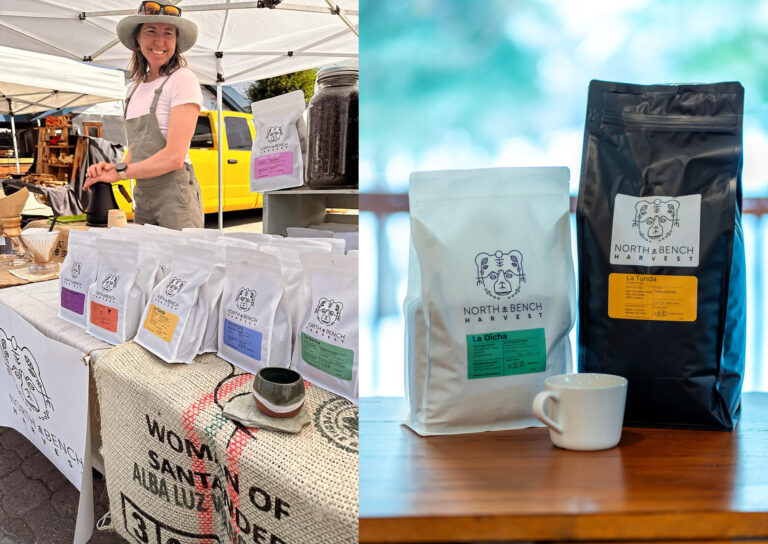
Amélie and Kyle spend their winters guiding people through the mountains — Amélie as a ski guide and Kyle as an IFMGA mountain guide. In the space between seasons, they’ve built Golden’s only coffee roastery – North Bench Harvest Coffee Roasters.
A six-year-old’s First Sip
Amélie’s love of coffee started early. On a rainy camping trip when she was six, she tasted her stepmom’s coffee, heavy on the sugar and milk. It stuck. She grew up in Quebec as specialty coffee shops took off and once dreamed of opening a café of her own.
She moved west about 20 years ago, settling first in Canmore before following Kyle — and the mountains — to Golden four years later.
The Turning Point
The idea took shape on a climbing trip in Greece. Amélie was dealing with a health setback and couldn’t climb, so the two of them brainstormed. Kyle had guided with someone who owned a roastery on the island and had watched it grow. Maybe, they thought, this could work at home.
By the time they flew back to Canada, they had a name and a roaster lined up. “Things fell into place super easily,” Amélie says. “We just kind of rolled with the punches, and now here we are.”
They tested the waters two years ago and launched in earnest in September 2025.
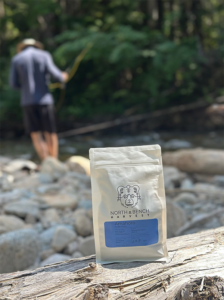
Finding Their Why
With roasters already in Canmore, Banff, Revelstoke, and Invermere, Amélie knew they needed a reason to exist beyond geography. She found it in the farmers.
North Bench Harvest prioritizes coffee from women-owned farms. When that isn’t possible, they choose producers with strong labour and environmental practices — like one farm that grows its coffee in a biodiverse, natural forest rather than simple shade rows.
They buy through small importers who know their growers personally. Amélie has spoken directly with two of their Colombian producers. One is a farmer whose coffee was the first they ever bought. Since then, the farmer has won a string of awards. Her twin daughters, Monica and Veronica, later bought land from her to start their own micro-farm — and North Bench buys their coffee too.
“They follow us on Instagram, and we can communicate about different things,” Amélie says. “We see their lives, and we contribute to that by buying their coffee. I think that’s pretty cool.”
That commitment to supporting producers extends beyond Columbia. One of their coffees came from a washing station in Rwanda where many of the women had survived violence. The work offered them a way forward.
Coffee for Mountain People
North Bench isn’t trying to take over the world. “We want to provide good coffee to mountain people,” Amélie says. “That’s kind of our thing.”
That local focus also reflects their values. The couple is reluctant to ship widely, partly for logistical reasons and partly because they don’t want to add to the trucks on the highway. Instead, a new coffee trailer will bring their coffee to community events and farmers’ markets.
Their successes are adding up. Their drip coffee is served at Double Black at Kicking Horse Mountain Resort, Jita’s Coffee Shop and Eat Pure Mountain Market. Battle Abbey buys their beans — “which was really validating,” Amélie says. They sponsored the Golden Cycling Club this summer and regularly donate coffee to local events.
“At the beginning we thought, oh, it’s just an extra source of income. Now we see it more as: you can’t give back if you don’t have money. The business allows you to give back.”
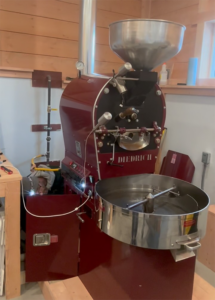
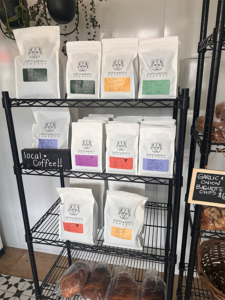
The Golden Advantage — and the Honest Truth
Amélie is candid about the challenges of operating in a small market. Golden is a tight community, and big, established roasters already supply many local businesses. Coffee is perishable, and small-town volume makes freshness a puzzle to solve. Her advice to new founders: do your market research first.
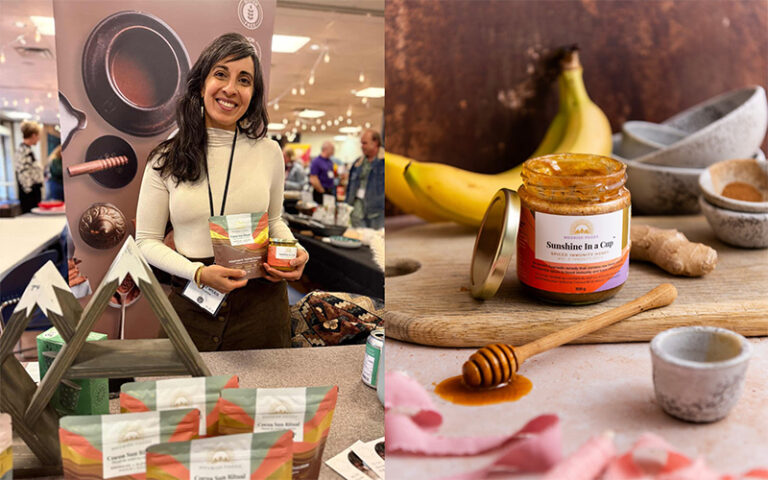
But being the only roaster in town, right on the Trans-Canada, presents a real opportunity. And the local support has been real too. Amélie credits a handful of local women business owners who encouraged her early — including Sheniz Wilkie of Noorish Foods, who has been generous with feedback and ideas. Her first wholesale pitch made her nervous, but the shop owner’s response was simple: of course she’d carry it.
Asked to sum up Golden’s business community in a sentence, Amélie doesn’t hesitate.
“They’re super supportive, and people want to see you succeed.”
For a two-person roastery one year in, that might be the most valuable ingredient of all.
Golden’s Producers: Small Batch, Big Roots is a series from Golden Community Economic Development. Read the other story: Noorish Foods: A National Brand, Run From the Mountains.